
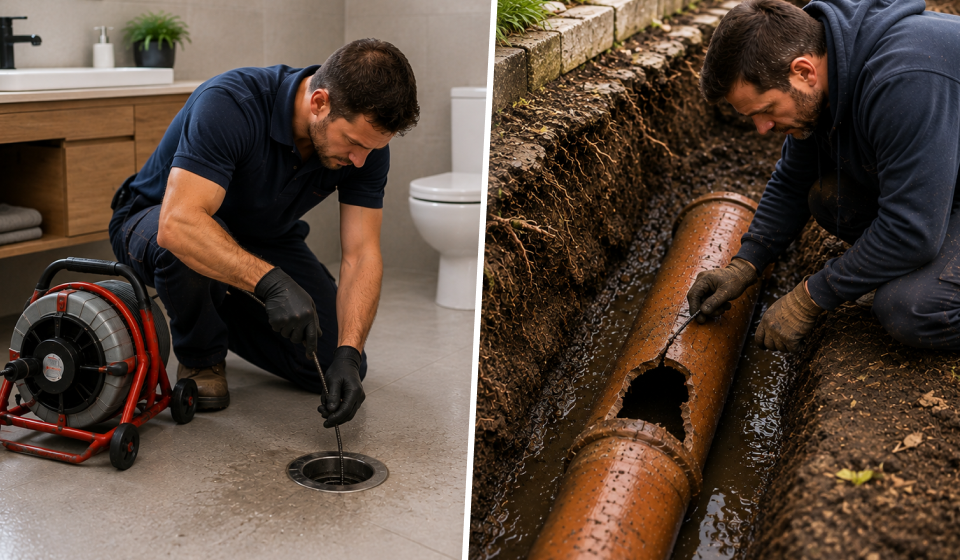
A slow or unpleasant-smelling drain does not always mean the pipework is damaged. In many cases, waste has collected inside the pipe and can be removed through professional unblocking. However, recurring problems, leaks and wider drainage issues may indicate that drain repair is required.
Knowing what to look for can help you arrange the right service before the problem becomes more disruptive. This guide outlines how to distinguish between a blocked drain and damaged pipework, along with the next steps in each situation.
Why Blocked and Damaged Drains Can Seem Similar
Both blockages and damaged pipes can interrupt the normal flow of wastewater. This may cause slow drainage, gurgling sounds, unpleasant odours or water backing up into a sink, shower or toilet.
These symptoms show that something is wrong, but they do not always reveal the cause. A build-up of waste may be restricting the pipe, or the pipe itself may have developed a crack, displaced joint or collapsed section.
The location, frequency and severity of the problem can provide useful clues. However, professional inspection may be needed when the cause cannot be identified from the surface.
Signs Your Drain May Only Need Unblocking
A blockage is more likely when the problem appears suddenly and affects only one fixture. For example, a kitchen sink may begin draining slowly because grease, food particles and soap residue have collected inside the waste pipe.
Bathroom drains can become restricted by hair and product residue, while toilets may block when wipes, sanitary products or excessive amounts of toilet paper enter the drainage system. Other signs may include gurgling from one sink, bath or toilet, a temporary unpleasant smell, or water backing up from a single fixture.
If the problem clears fully and does not return, the pipework may still be structurally sound. In this situation, professional drain unblocking can remove the obstruction and restore normal flow.
When Your Drain May Need Repair
Physical damage is more likely when the same drain keeps blocking after it has been cleared. A crack, displaced connection or uneven section can catch debris and cause waste to collect repeatedly.
Damp patches, unexplained leaks and unusually soft ground near an outside drain may indicate that wastewater is escaping from the pipe. Persistent sewage smells can also occur when a damaged section allows waste or gases to escape from the drainage system.
Several fixtures developing problems at the same time may suggest an issue within a shared or main drainage pipe. Tree roots can enter through small openings, while ageing pipework may weaken, move or collapse.
These problems normally require professional drain repair services rather than another basic clearance.
How a CCTV Drain Survey Identifies the Cause
A CCTV drain survey uses specialist camera equipment to examine the inside of the pipework. It can locate an obstruction and show whether the drain contains cracks, movement, root intrusion or collapsed areas.
The survey helps determine whether unblocking will be enough or whether repair work is needed. It can also show the position and extent of the damage, allowing the most suitable solution to be planned.
Accurate diagnosis may reduce unnecessary excavation because the affected area can be located before work begins.
What Happens After the Drain Has Been Inspected
Clearing a Simple Blockage
When the pipe is in suitable condition, the obstruction can be removed using an appropriate clearance method. The drainage system can then be checked to confirm that water is flowing normally.
The engineer may also identify what caused the blockage and explain how the risk of recurrence can be reduced.
Repairing Damaged Pipework
When damage is found, the repair method will depend on its location, size and severity. A small local defect may require a different approach from a collapsed or extensively damaged pipe.
Access, pipe depth and the condition of the surrounding area can also influence how the repair is completed.
When to Contact a Drainage Professional
Professional assistance should be arranged when sewage is backing up, wastewater is overflowing or the problem is preventing normal use of the property.
Strong persistent odours, visible leaks and repeated blockages should also be investigated. An emergency drain repair may be needed when damaged pipework is causing active flooding, sewage escape or an immediate risk to the property.
Reducing water use until help arrives may prevent additional wastewater from entering the affected drain.
Preventing Future Drainage Problems
Avoid pouring fats, oils and grease into kitchen sinks. Food waste, wipes, sanitary products and other unsuitable items should also be kept out of the drainage system.
Early attention to slow drainage, recurring smells and unusual noises can help prevent a smaller issue from becoming more disruptive. Properties with repeated problems may also benefit from planned inspection or maintenance.
Final Thoughts
A one-off obstruction may only need professional unblocking. However, repeated blockages, leaks, persistent odours or problems affecting several fixtures may indicate damaged pipework and the need for blocked drain repair.
TCM Draincare can inspect the system, identify the likely cause and recommend an appropriate solution based on the condition of the drain. Correct diagnosis can help avoid unnecessary work while ensuring that genuine damage is properly addressed.
Frequently Asked Questions
Can a blocked drain damage the pipework?
A severe or untreated blockage can increase pressure and contribute to leaks. However, some repeated blockages are caused by damage that already exists.
Why does my drain keep blocking after being cleared?
A crack, displaced joint, root intrusion or poorly aligned pipe may repeatedly catch waste. A CCTV survey can help locate the underlying cause.
Can a CCTV drain survey show whether repairs are needed?
Yes. It can reveal blockages and structural defects, helping determine whether the drain needs simple clearance, local repair or more extensive work.
Does a cracked drain always need excavation?
No. Some cracks can be treated through pipe relining or patch repairs. Excavation may be needed when the pipe has collapsed or moved significantly.
How quickly should a damaged drain be repaired?
Repairs should be arranged promptly when the damage is causing flooding, leaks, sewage escape or repeated blockages. Other defects should be assessed before they worsen.